

Products

Home > Products > Products > Raney Nickel Mesh Electrode

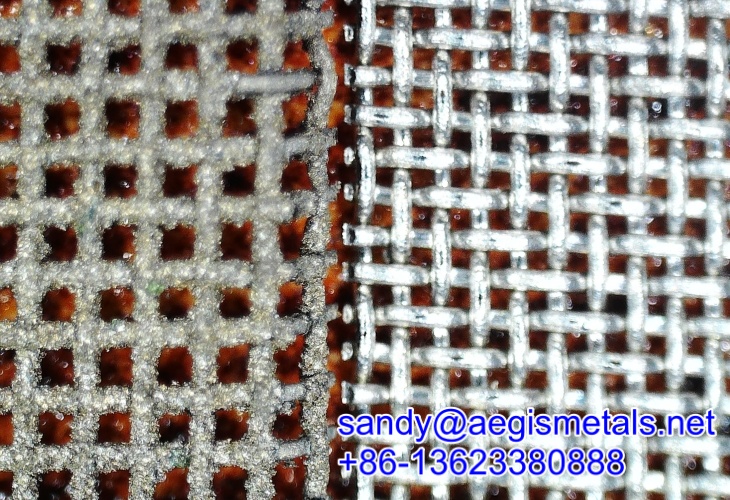
Raney Nickel Mesh Electrode

Detailed Specifications

Comparison with Modern Alternatives

While highly effective, Raney nickel mesh electrodes are sometimes compared to newer materials:

Feature Raney Nickel Mesh Electrode Modern Alternatives (e.g., Pt/C, Ni-Mo alloys on PTL)
Cost Low (uses abundant Ni). High for Pt-based; moderate for advanced Ni alloys.
Activity Very High (geometric area). Can be higher (Pt) or comparable (advanced alloys).
Stability Good in alkali, but can slowly deactivate (sintering, poisoning). Pt/C can degrade in alkali; some new alloys offer excellent stability.
Surface Area Extremely high (internal pores). High, but often from nano-particles on a support.
Technology Maturity Mature, industrial-scale. Some are emerging (R&D to early commercial).
Features
  • Exceptionally High Surface Area: The primary advantage. The leaching process creates a nano-porous structure, exposing a vast number of active nickel sites.

  • High Catalytic Activity: Excellent for reactions involving hydrogen (e.g., hydrogen evolution, hydrogenation) and oxygen (e.g., oxygen reduction) due to nickel’s inherent properties and the surface area.

  • Good Stability in Alkaline Media: Raney nickel is stable and commonly used in concentrated KOH or NaOH electrolytes, which is crucial for alkaline water electrolysis and fuel cells.

  • Gas Permeability: The mesh structure combined with the porous catalyst facilitates efficient three-phase (solid catalyst/liquid electrolyte/gas reactant) contact, which is critical for gas diffusion electrodes.

  • Established Manufacturing: The process for making Raney-type catalysts is well-known and scalable.

Applications
  1. Alkaline Water Electrolysis (AWE):

    • Function: Used as the cathode for the Hydrogen Evolution Reaction (HER).

    • Why: It is a highly active, durable, and cost-effective catalyst for producing hydrogen in traditional industrial electrolyzers. Its high surface area reduces the overpotential for HER, improving efficiency.

  2. Alkaline Fuel Cells (AFCs):

    • Function: Often used as the anode for the Hydrogen Oxidation Reaction (HOR).

    • Why: It efficiently catalyzes the splitting of hydrogen fuel in the alkaline environment. Raney nickel anodes have been a cornerstone of historical AFC technology (e.g., NASA space shuttle).

  3. Industrial Electrochemical Hydrogenation:

    • Function: As a cathode to hydrogenate organic compounds.

    • Why: Its high activity allows for selective hydrogenation of various substrates at lower temperatures and pressures compared to thermal catalytic processes.

  4. Chlor-Alkali Electrolysis (Historical/Modern Variants):

    • Function: As a cathode in some cell designs.

    • Why: Its efficiency in HER improves the overall energy consumption of chlorine and caustic soda production.

Make an Enquiry

Get quote or arrange a callback from one of our specialist sales agents

Enquire Now

Message X
